
Overview
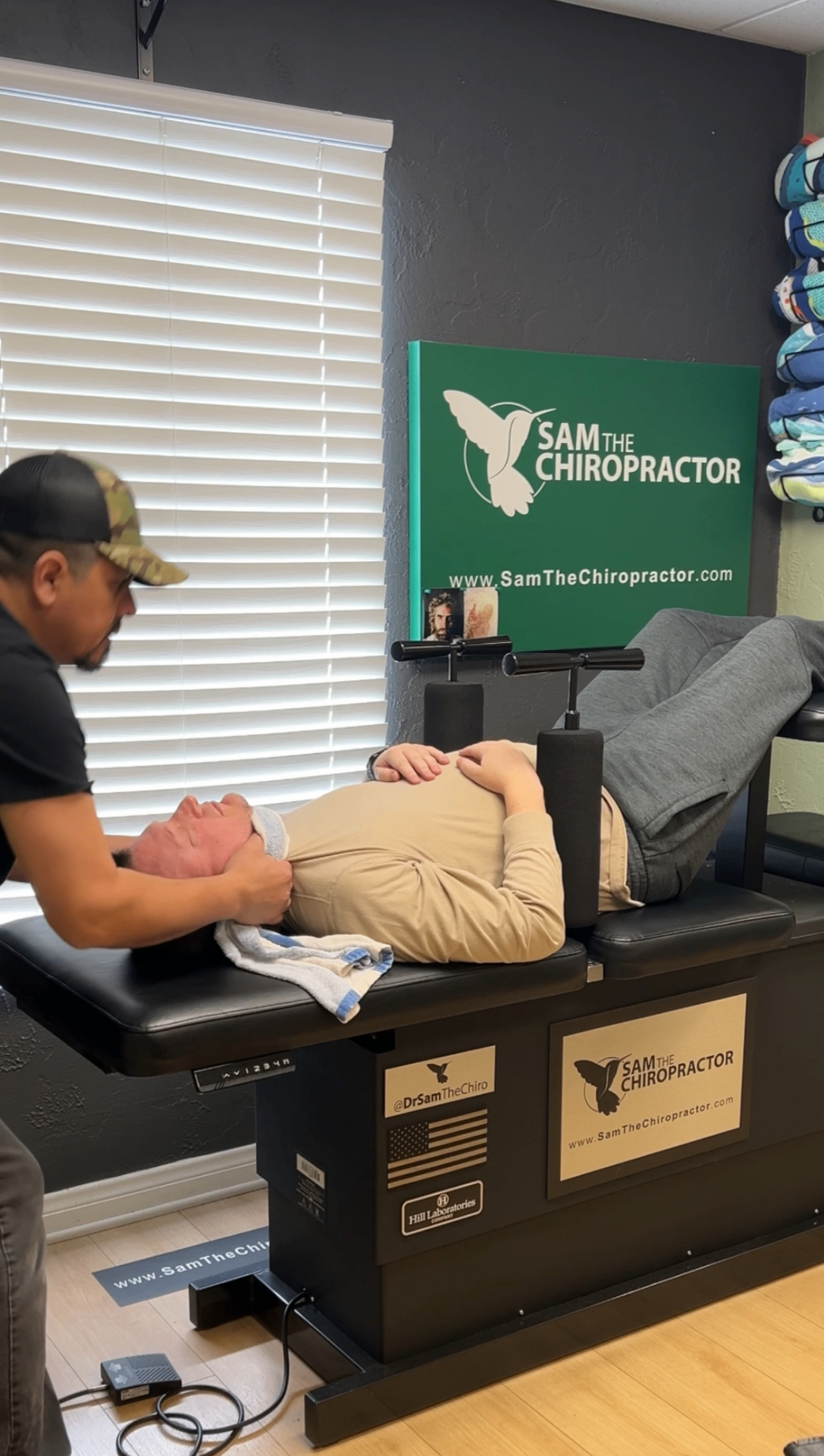
Manual decompression uses precise, sustained traction to create space between vertebrae — letting hydration and healing return to the disc.
Quick takeaway
Gentle, hands-on traction to relieve pressure on compressed discs and nerves without machines or drugs.
What it does
Here's what most patients notice from spinal decompression / manual traction — outcomes vary by case, but these are the consistent themes we see in the clinic.
- Relieves disc pressure
- Reduces nerve impingement
- Restores natural curvature
- No drugs, no surgery
How it works
Dr. Sam applies measured force along the spine to lengthen and decompress affected segments. This is especially effective for early-stage disc bulges and post-injury recovery.
Watch Spinal Decompression / Manual Traction in action
Real footage from the clinic — see Dr. Sam perform spinal decompression / manual traction and related techniques. More on the video gallery.
Full Spine Decompression
In-depth guide to Spinal Decompression / Manual Traction
Manual spinal decompression is one of the oldest and most studied conservative interventions for disc-related pain. Long before motorized decompression tables or surgical microdiscectomy existed, skilled practitioners used hands-on traction to reduce intradiscal pressure, encourage retraction of bulging disc material, and create breathing room for compressed nerve roots. Dr. Samuel Ruiz continues that tradition at our Ontario, CA clinic, combining classical manual traction with modern biomechanical assessment to give patients a drug-free, surgery-free path out of chronic back and neck pain.
The disc itself is a remarkable structure: a tough outer ring (the annulus fibrosus) wrapped around a gel-like center (the nucleus pulposus). When the disc is healthy and well-hydrated, it acts as a shock absorber and pivot point between vertebrae. When it loses water — whether from age, repetitive loading, dehydration, or injury — it loses height, bulges outward, and stops doing its job. The vertebrae above and below settle closer together, the facet joints behind the disc take on extra load, and nearby nerve roots can become crowded or inflamed. The result is the familiar pattern of localized back pain with radiating symptoms into an arm or leg.
Manual decompression interrupts this cycle by applying a sustained, axial traction force across the affected segment. The brief negative pressure inside the disc encourages fluid and nutrients to move back in — a passive process called imbibition that is essential because discs have no direct blood supply. Repeated, well-dosed decompression sessions can measurably restore disc height, reduce bulging on follow-up imaging, and most importantly, eliminate the nerve-root irritation that drives radiating pain.
Dr. Sam's approach is patient-specific. Some patients respond best to long-axis traction with the body in a neutral position. Others need flexion-biased decompression for posterior disc bulges, or extension-biased techniques for stenosis and facet-loaded pain. The Ring Dinger® maneuver itself is a form of high-velocity manual decompression and is often combined with slower, sustained traction to address both the acute restriction and the underlying disc pathology. Sessions are short, comfortable, and never involve heavy machinery, straps, or harnesses.
What manual decompression is not is a mechanical, one-size-fits-all process. Motorized decompression tables can be effective, but they apply the same force in the same direction regardless of how the patient's tissue responds in real time. A trained pair of hands feels guarding, restriction, and end-feel as it happens, and adjusts force and angle continuously. That feedback loop is why manual decompression often outperforms machine-based protocols for complex cases — and why patients frequently feel relief during the very first session rather than waiting weeks for results.
Ideal candidates include patients with confirmed lumbar or cervical disc bulges, mild to moderate herniations, foraminal or central stenosis, post-injury back pain that has not responded to rest or medication, and athletes or workers with chronic compression-pattern pain. Patients with severe progressive neurological deficit, cauda equina symptoms, fracture, infection, or active malignancy are referred out for appropriate medical workup before any decompression is attempted. Safety screening is built into every consultation.
A typical care plan starts with two to three closely-spaced visits to confirm response and reduce acute symptoms. Once pain is under control, visits taper to a corrective phase focused on restoring full range of motion, rebuilding the supporting musculature, and educating the patient on posture, lifting mechanics, and daily habits that protect the disc. Most patients graduate to a maintenance schedule of one visit every four to eight weeks. Many report that a problem they had been managing with pain medication for years resolves within a few months of consistent care.
If you are considering surgery, injections, or long-term opioids for disc pain, conservative manual decompression is almost always worth trying first. Patients across Ontario, Rancho Cucamonga, Chino Hills, Eastvale, Riverside, Fontana, Upland, and the broader Inland Empire travel to the clinic specifically because we offer this kind of focused, hands-on care without the production line feel of larger spine centers. New patient visits are $300 and include a full evaluation; follow-ups are $200.
Manual decompression rewards a clinician who reads tissue in real time, and that is where Dr. Sam's hands-on training matters most. Force, vector, and hold time are continuously adjusted to what the spine is actually giving back — never to a rigid protocol. Patients with prior bad experiences from aggressive motorized tables are often surprised at how gentle correctly applied manual traction feels: slow build-up, sustained stretch, and a measured release that lets the disc rehydrate rather than rebound.
To start manual decompression care, call (909) 529-1179 to schedule. Bring any imaging or PT records so Dr. Sam can target the right segments from minute one. The clinic sits at 1155 S. Milliken Ave, Suite J, Ontario, CA 91761, with easy freeway access (10, 60, 15, 71) and free parking. Most disc patients respond within two to four visits; new-patient evaluation is $300 (includes the first treatment), follow-ups $200, with HSA/FSA, debit, and credit cards accepted.
Who it's for
Spinal Decompression / Manual Traction is a strong fit for patients dealing with:
- Bulging or herniated discs
- Stenosis
- Post-injury rehab
What to expect at your visit
- 1
Consultation & exam
Dr. Sam reviews your history, posture, and movement to find the root cause — not just the symptom.
- 2
Hands-on treatment
Your spinal decompression / manual traction session is delivered one-on-one with no rushed handoffs or assistants.
- 3
Plan forward
You leave with a clear understanding of what was done, how you'll likely feel, and whether follow-up care is recommended.
Frequently asked
Does it hurt?
Most patients describe the sensation as a deep stretch followed by relief. Dr. Sam adjusts force to your comfort.
How long is the appointment?
Plan for about 30–45 minutes. New patient visits include a full exam and may run slightly longer.
Do you accept insurance?
We're a transparent cash-pay practice. New patient $300, follow-ups $200. HSA, debit and credit accepted.