
Overview
The Ring Dinger® is a precision full-spine decompression maneuver Dr. Sam is certified in by Advanced Chiropractic Relief.
Quick takeaway
Our flagship full-spine decompression — restore alignment and ease pressure on discs and nerves in a single, focused appointment.
What it does
Here's what most patients notice from ring dinger® decompression — outcomes vary by case, but these are the consistent themes we see in the clinic.
- Full-spine decompression in seconds
- Audible release of trapped pressure
- Targets compressed discs and pinched nerves
- Trusted by professional athletes
How it works
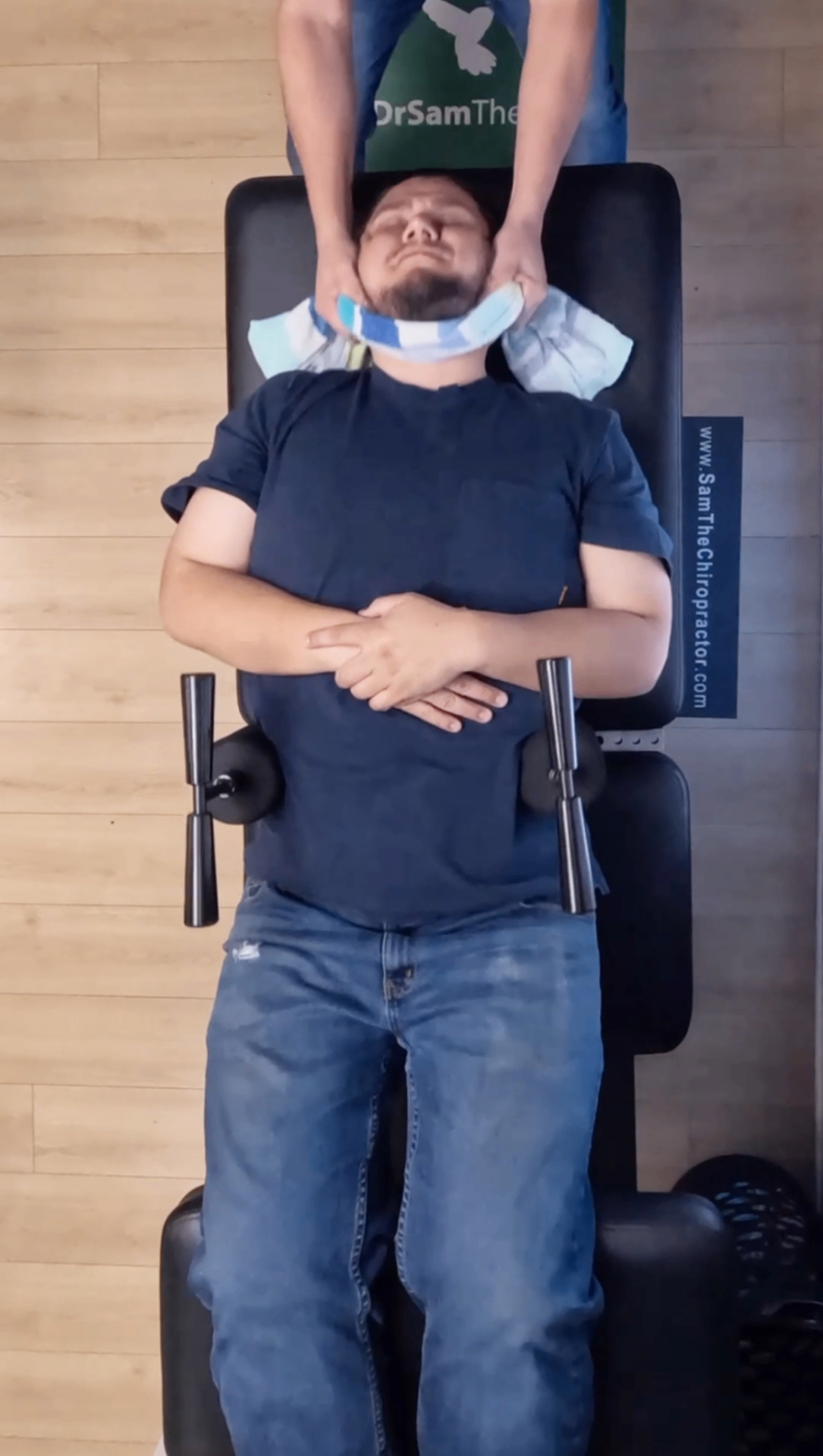
Patients lie supine while Dr. Sam evaluates spinal alignment and applies a controlled traction maneuver. The result is an immediate decompression of the spine that often produces a satisfying 'pop' along multiple vertebral segments. It is one of the most-requested techniques in the clinic.
Watch Ring Dinger® Decompression in action
Real footage from the clinic — see Dr. Sam perform ring dinger® decompression and related techniques. More on the video gallery.
Ring Dinger® Adjustment
In-depth guide to Ring Dinger® Decompression
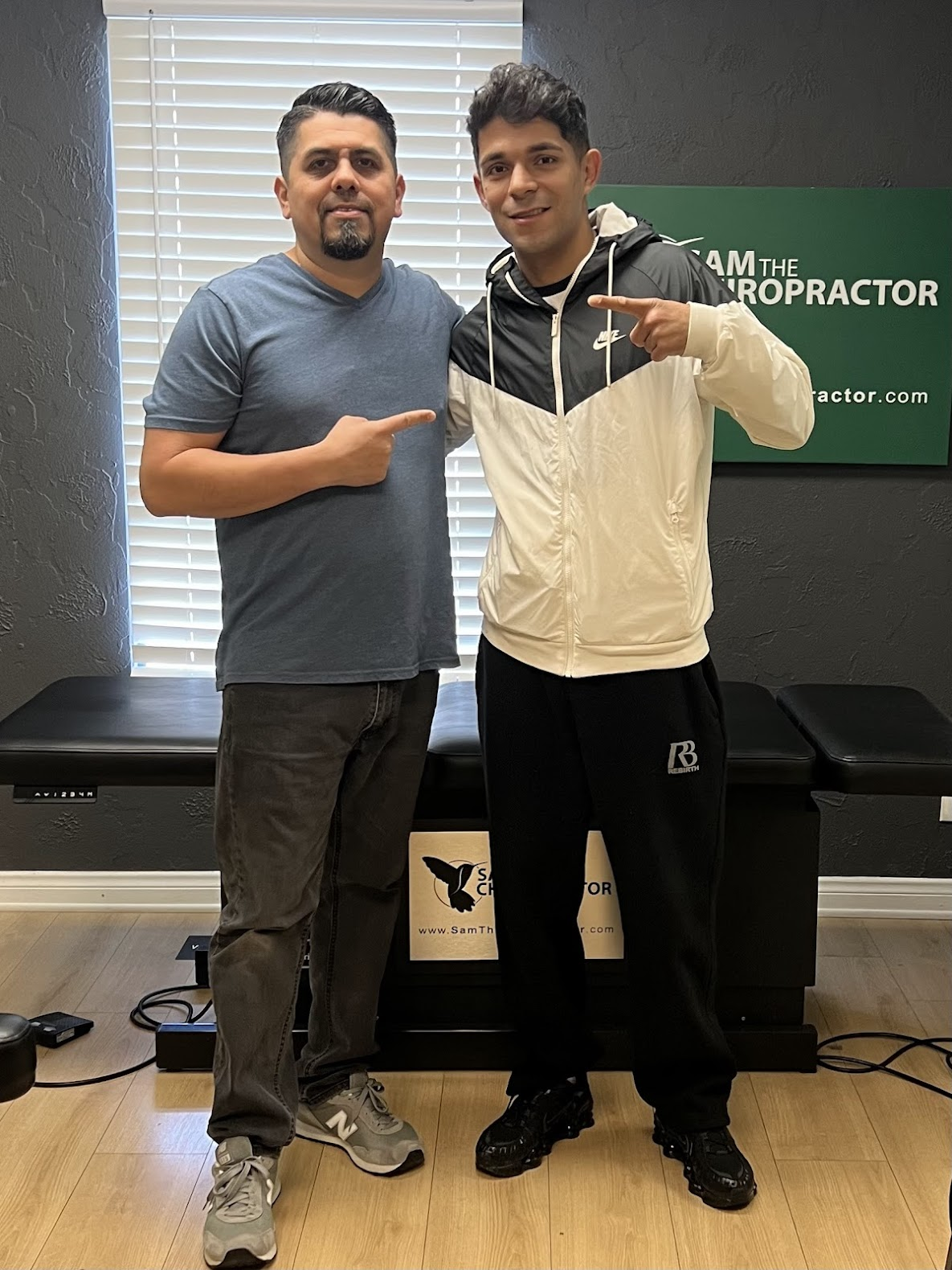
The Ring Dinger® — formally known as the Y-axis manual decompression maneuver of the Johnson BioPhysics® Technique — was developed by Dr. Gregory Johnson at Advanced Chiropractic Relief in Houston, Texas. Over four decades of clinical refinement have turned it into one of the most recognizable full-spine decompression procedures in the world, with millions of demonstrations viewed online and a growing roster of certified providers. Dr. Samuel Ruiz completed the Ring Dinger® certification under the Johnson family directly, training in the exact biomechanical sequencing, patient positioning, and force vectors that make the maneuver both safe and dramatically effective.
What separates a Ring Dinger® from a generic 'neck crack' or chiropractic adjustment is the simultaneous, multi-segmental release. A traditional adjustment cavitates one or two joints at a time. The Ring Dinger® applies a controlled traction force along the long axis of the spine, decompressing every spinal segment from the base of the skull through the sacrum in a fraction of a second. Patients often hear a cascade of audible releases — sometimes described as 'a string of firecrackers' — as trapped intra-articular gas escapes from facet joints that have been locked under load for months or years.
The clinical reasoning is straightforward. Modern life compresses the spine relentlessly: gravity, prolonged sitting, lifting with poor mechanics, sports impact, motor-vehicle collisions, and even the simple act of holding up a heavy head while staring at a phone. Over time, intervertebral discs lose hydration, facet joints jam, and nerve roots get crowded. Decompression — done well — reverses that load momentarily, allowing synovial fluid to redistribute, discs to imbibe water, and the nervous system to reset its protective muscle guarding. Patients frequently leave the office standing visibly taller, breathing more deeply, and reporting an immediate reduction in pain.
A Ring Dinger® session at our Ontario, CA clinic typically begins with a posture and motion exam. Dr. Sam evaluates head carriage, shoulder leveling, hip symmetry, and segmental restriction. He may take or review existing imaging if disc pathology is suspected. The patient lies face-up on the adjusting table while Dr. Sam stabilizes the cervical spine, applies a precise pre-tension, and delivers the decompression in one smooth, controlled motion. The maneuver itself takes seconds. Total appointment time runs about 30–45 minutes including evaluation, the adjustment itself, and post-care guidance.
Safety is non-negotiable. The Ring Dinger® is not appropriate for every patient — acute disc rupture with severe neurological deficit, untreated osteoporosis, certain post-surgical hardware, or unstable craniocervical conditions are screened out during the consultation. When indicated, however, it is one of the lowest-force, highest-yield techniques in chiropractic. The traction itself is well within physiological tolerance; what makes it feel dramatic is the speed and the multi-segment release, not raw force.
Patient outcomes are remarkably consistent. A typical first-visit response includes immediate reduction in radiating pain, restoration of cervical or lumbar range of motion, and a noticeable easing of chronic muscular tension in the upper traps, paraspinals, and gluteal region. Many patients are able to take their first deep breath in months — a side effect of releasing fixated thoracic segments that restrict rib motion. Athletes report immediate improvements in overhead mobility, hip rotation, and squat depth. Office workers report relief from headaches, jaw tension, and that constant 'tight band' across the upper back.
Frequency of care depends on goals and findings. Patients with acute pain often benefit from two to three closely-spaced visits to lock in the correction, then taper to maintenance every two to six weeks. Wellness patients and athletes typically come monthly to keep the spine moving freely under training load. Dr. Sam will give you an honest, individualized recommendation after the first visit — there is no long-term contract, no pressure to commit, and no upselling. The goal is always to get you out of pain, keep you mobile, and let you live without thinking about your spine.
If you have been searching for a chiropractor who specializes in full-spine decompression in the Inland Empire, Ring Dinger® care is the foundation of our practice. Patients travel from Ontario, Rancho Cucamonga, Chino, Chino Hills, Upland, Fontana, Riverside, San Bernardino, Pomona, Diamond Bar, Eastvale, and across Los Angeles and Orange County for this exact service. Same-day appointments are frequently available; new patients pay a flat $300 (exam plus first adjustment) and follow-ups are $200, with HSA, debit, and credit accepted.
What truly sets Ring Dinger® care apart at our Ontario clinic is the combination of certification, repetition, and patient screening. Dr. Sam has performed thousands of full-spine decompression maneuvers and refuses to deliver one until the exam confirms it is the right tool for the case. That discipline is why first-time patients leave amazed instead of guarded — the maneuver is calibrated to your spine, not a one-size demonstration. If the Ring Dinger® is not indicated for you that day, you will hear it directly, and a safer technique will be substituted at no extra charge.
To book a Ring Dinger® session, call (909) 529-1179 or use the online scheduler. Wear comfortable, stretchy clothing (gym wear is ideal — no belts or thick denim), arrive ten minutes early for paperwork, and bring any recent MRI or X-ray reports if you have them. The clinic is at 1155 S. Milliken Ave, Suite J, Ontario, CA 91761 with free parking and quick access from the 10, 60, 15, and 71. Visits run 30–45 minutes; new patients are $300 (exam plus first decompression), follow-ups $200, with cash, debit, credit, and HSA/FSA accepted.
Who it's for
Ring Dinger® Decompression is a strong fit for patients dealing with:
- Chronic neck or low-back tension
- Sciatica or radiating leg pain
- Disc compression
- Stiffness from desk work or training
What to expect at your visit
- 1
Consultation & exam
Dr. Sam reviews your history, posture, and movement to find the root cause — not just the symptom.
- 2
Hands-on treatment
Your ring dinger® decompression session is delivered one-on-one with no rushed handoffs or assistants.
- 3
Plan forward
You leave with a clear understanding of what was done, how you'll likely feel, and whether follow-up care is recommended.
Frequently asked
What is a Ring Dinger®?
The Ring Dinger® is the Y-axis manual spinal decompression maneuver of the Johnson BioPhysics® Technique, developed by Dr. Gregory Johnson. The patient lies face-up while the chiropractor applies a controlled traction force along the long axis of the spine, decompressing every segment from the base of the skull through the sacrum in a fraction of a second.
Is the Ring Dinger® safe?
Yes, when performed by a certified provider after a proper exam. It is a low-force, high-yield traction technique well within physiological tolerance. Dr. Sam screens out acute disc rupture with neurological deficit, untreated osteoporosis, certain post-surgical hardware, and unstable craniocervical conditions before performing it.
Does the Ring Dinger® hurt?
Most patients describe it as a deep, satisfying stretch followed by immediate relief. You may hear a cascade of audible releases as trapped gas escapes locked facet joints. Mild soreness for a day afterward is normal, similar to after a good workout.
How much does a Ring Dinger® cost in Ontario, CA?
New patients are a flat $300, which includes the exam and your first full-spine decompression. Follow-up visits are $200. We're a transparent cash-pay clinic and accept cash, debit, credit, and HSA/FSA.
Who is certified to perform the Ring Dinger® near me?
Dr. Samuel Ruiz completed Ring Dinger® certification under the Johnson family at Advanced Chiropractic Relief in Houston, Texas. Patients drive to his Ontario, CA clinic from Rancho Cucamonga, Chino, Chino Hills, Upland, Fontana, Riverside, San Bernardino, Pomona, Eastvale, and across LA and Orange County.
How many Ring Dinger® sessions will I need?
Acute cases often benefit from two to three closely spaced visits to lock in the correction, then maintenance every two to six weeks. Athletes and wellness patients typically come monthly. There are no contracts and no upselling.
What should I wear and how long does it take?
Wear comfortable, stretchy clothing — gym wear is ideal, no belts or thick denim. Plan for a 30–45 minute visit including exam, the decompression itself, and post-care guidance.