
Overview
Disc injuries respond beautifully to careful decompression and adjustment when caught early and treated by an expert.
Quick takeaway
Targeted, conservative care for disc injuries — without surgery or long-term medication.
What it does
Here's what most patients notice from herniated, bulging & compressed discs — outcomes vary by case, but these are the consistent themes we see in the clinic.
- Reduces disc pressure
- Calms nerve irritation
- Restores mobility
- Avoids invasive intervention
How it works
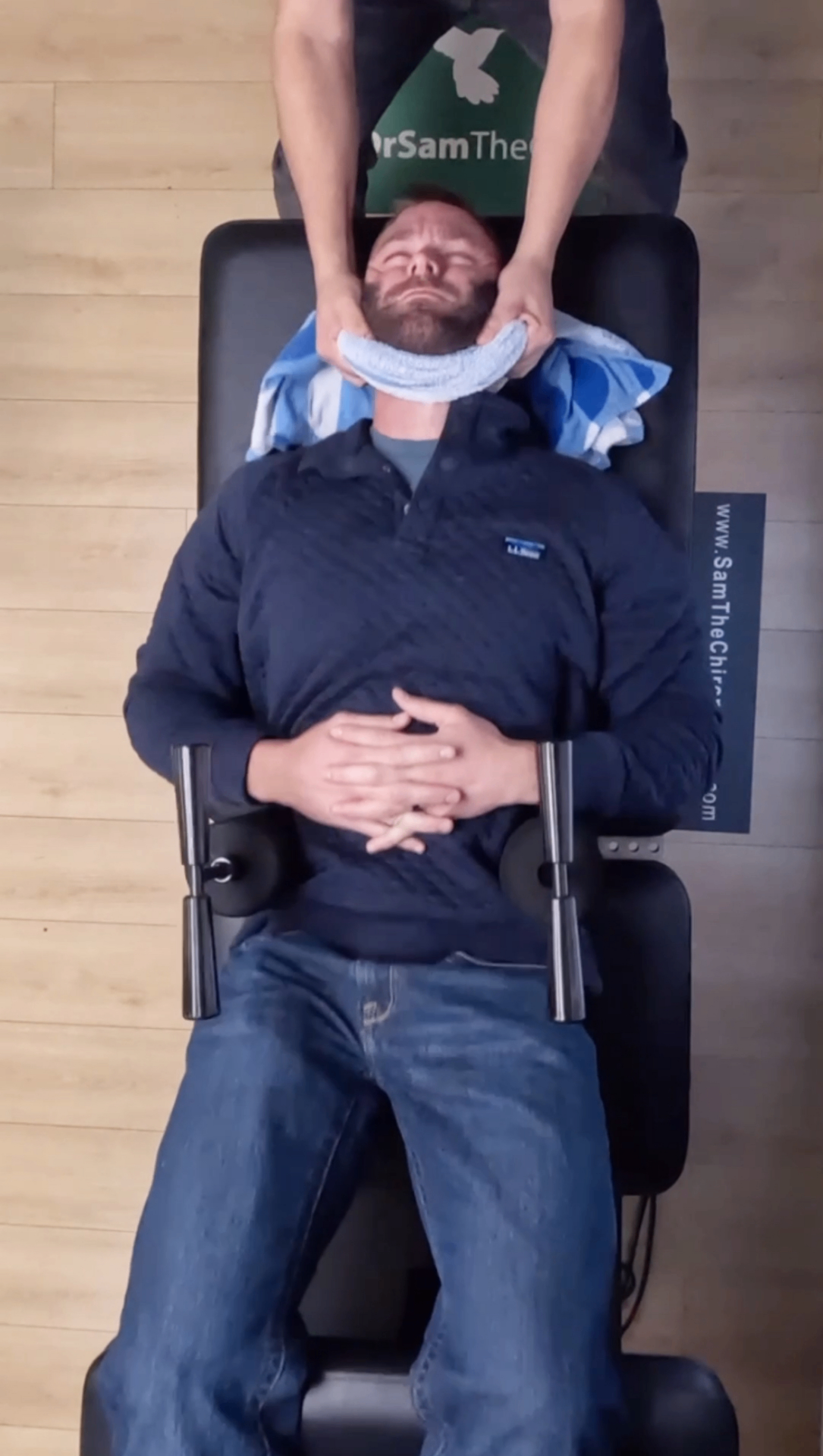
Dr. Sam combines Ring Dinger® decompression, manual traction and Johnson BioPhysics® corrections to reduce protrusion, rehydrate the disc and let the body heal naturally.
Watch Herniated, Bulging & Compressed Discs in action
Real footage from the clinic — see Dr. Sam perform herniated, bulging & compressed discs and related techniques. More on the video gallery.
Patient Relief Session
In-depth guide to Herniated, Bulging & Compressed Discs
Disc injuries are among the most common reasons patients walk into a chiropractor's office, and they are also among the most misunderstood. The terms herniation, bulge, protrusion, extrusion, and degenerative disc disease get used interchangeably in conversation but describe distinct stages and patterns of injury. Dr. Samuel Ruiz takes the time to explain exactly what your imaging shows, what symptoms it does and does not account for, and what the realistic conservative path forward looks like — without rushing you toward injections or surgery as a first option.
A bulging disc is the earliest and most common pattern: the outer ring of the disc has weakened and the disc material has spread outward symmetrically, like a tire losing air. A herniation is more focal — a defect in the outer ring through which inner disc material pushes outward, sometimes contacting or compressing a nerve root. An extrusion or sequestration is a more advanced injury where disc material has broken away. Most patients fall into the bulge or contained herniation category, and the great majority of those respond beautifully to a structured course of conservative care.
The conservative care plan at our Ontario clinic is built around three pillars. First, decompression — reducing the load on the injured disc to allow inflammation to subside and the disc material to retract. Second, alignment — correcting the segmental restrictions and postural patterns that are loading the disc unevenly. Third, rebuilding — giving the patient targeted mobility and core stability work so the corrected position becomes the new normal. Skipping any of the three is the most common reason disc patients relapse after initial relief.
Dr. Sam combines several techniques to deliver this plan. Ring Dinger® full-spine decompression provides immediate relief of segmental loading. Manual traction targets the specific level of injury with sustained, low-force decompression. Flexion distraction is used for posterior lumbar disc bulges that benefit from gentle, table-assisted motion. Johnson BioPhysics® corrections address the long-term postural drivers — forward head posture, anterior pelvic tilt, hyperlordosis — that load discs unevenly in the first place.
What most disc patients want to know is whether they are heading toward surgery. The honest answer is that the overwhelming majority of disc herniations resolve without surgical intervention. Multiple long-term studies have shown that patients who choose conservative care for lumbar disc herniation end up with similar pain and function outcomes at one year compared to surgical patients, often without the cost, recovery time, or risks of an operation. Surgery has its place — for cauda equina syndrome, progressive motor deficit, or intractable pain that has not responded to a thorough course of conservative care — but it should rarely be the first stop.
Red flags we screen for at every visit include progressive weakness in a limb, loss of bowel or bladder control, saddle-area numbness, fever combined with back pain, unexplained weight loss, and pain that wakes you at night and is unrelieved by position change. Any of these triggers immediate referral for medical workup. Conservative chiropractic care is for the much larger group of patients with mechanical disc pain — pain that is positionally reproducible, modifiable with movement, and has clear postural and biomechanical drivers.
Recovery timelines vary. Patients with an acute, recent disc injury often feel meaningful improvement within the first one to three visits and substantial resolution within four to eight weeks. Patients with longstanding chronic disc pain typically need a longer corrective phase — three to six months of consistent care — to undo years of altered loading patterns. Either way, Dr. Sam gives you a clear, time-bounded plan with measurable progress checkpoints. If you are not getting better, the plan changes; we do not believe in indefinite care without progress.
Disc patients travel from Ontario, Rancho Cucamonga, Chino, Chino Hills, Eastvale, Corona, Riverside, Fontana, San Bernardino, Upland, Pomona, and beyond for this focused, hands-on approach to disc care. New patient appointments are $300 and include a full evaluation; follow-ups are $200. If you have been told that surgery or injections are your only options, it is worth a single conservative consultation before committing to anything irreversible.
Disc cases are where conservative chiropractic care can either be life-changing or actively harmful, depending on the clinician. Dr. Samuel Ruiz screens carefully — reviewing imaging, neurological signs, and red flags before choosing any technique — and openly co-manages with orthopedic surgeons or pain-management physicians when a case calls for it. That honesty is why many patients arrive on a referral from a surgeon who wanted them to exhaust non-surgical options first. Most disc patients improve substantially without injections or surgery; the few who do not get a clear, evidence-based handoff.
If you suspect a disc issue, call (909) 529-1179 and mention any radiating pain, numbness, or weakness so the front desk can prioritize scheduling. Bring MRI reports and films if available. The clinic is at 1155 S. Milliken Ave, Suite J, Ontario, CA 91761, with free parking and quick access from the 10, 60, 15, and 71 freeways. New-patient disc evaluations are $300 (full exam plus first treatment), follow-ups $200, with HSA/FSA, debit, and credit cards accepted.
Who it's for
Herniated, Bulging & Compressed Discs is a strong fit for patients dealing with:
- Lumbar or cervical disc herniation
- Bulging discs
- Discogenic pain
What to expect at your visit
- 1
Consultation & exam
Dr. Sam reviews your history, posture, and movement to find the root cause — not just the symptom.
- 2
Hands-on treatment
Your herniated, bulging & compressed discs session is delivered one-on-one with no rushed handoffs or assistants.
- 3
Plan forward
You leave with a clear understanding of what was done, how you'll likely feel, and whether follow-up care is recommended.
Frequently asked
Does it hurt?
Most patients describe the sensation as a deep stretch followed by relief. Dr. Sam adjusts force to your comfort.
How long is the appointment?
Plan for about 30–45 minutes. New patient visits include a full exam and may run slightly longer.
Do you accept insurance?
We're a transparent cash-pay practice. New patient $300, follow-ups $200. HSA, debit and credit accepted.