
Overview
Most chronic headaches start in the upper neck. Restore alignment there and the headaches often stop.
Quick takeaway
Upper-cervical care that addresses the structural source of recurring tension headaches and migraines.
What it does
Here's what most patients notice from headaches & migraines — outcomes vary by case, but these are the consistent themes we see in the clinic.
- Fewer headaches
- Less reliance on medication
- Better sleep
- Reduced jaw and eye tension
How it works
Dr. Sam evaluates the upper cervical spine and applies precise corrections to restore normal motion and blood flow — a proven approach for tension, cervicogenic and migraine headaches.
In-depth guide to Headaches & Migraines

Chronic headaches and migraines are one of the most common complaints we see, and one of the most rewarding to treat. The vast majority of recurring headaches have a structural component originating in the upper cervical spine — the joints between the skull, atlas (C1), axis (C2), and the segments immediately below. When those joints are restricted, the surrounding muscles, nerves, and blood vessels become irritated in predictable patterns that produce equally predictable headache symptoms. Restore normal motion to the upper neck and the headaches often stop coming.
Cervicogenic headache — headache referred from the cervical spine — typically presents as a one-sided, dull, pressing pain that starts at the base of the skull and wraps up over the head, sometimes into the eye or temple. It is often triggered or worsened by prolonged neck postures, head movement, or pressure on specific points in the suboccipital region. Tension-type headache presents more diffusely, often described as a tight band around the head, and is closely linked to muscular tension and postural strain. Migraines are a distinct neurological condition, but a meaningful percentage of migraineurs have a cervical trigger that, when treated, dramatically reduces frequency and intensity even when it is not the sole cause.
Dr. Sam's evaluation begins with a careful history: pattern, frequency, duration, triggers, associated symptoms like aura or nausea, medication use, and any history of head or neck trauma including whiplash. He then examines posture (especially forward head posture, which dramatically increases load on the upper cervical region), cervical range of motion, segmental joint motion, suboccipital muscle tone, and TMJ function. Red flags — sudden severe headache, neurological deficit, fever, vision changes — are screened at every visit and trigger appropriate referral.
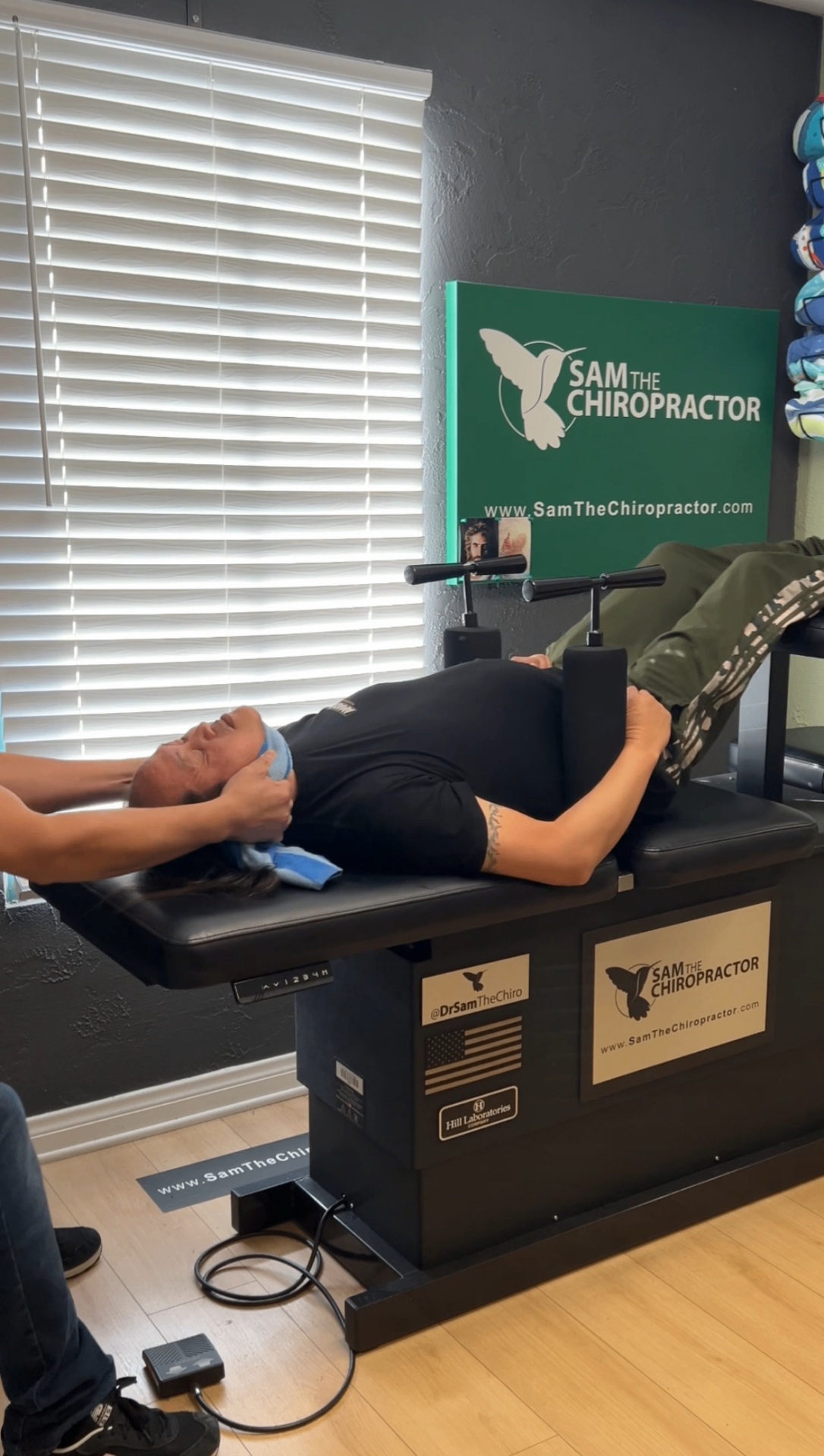
Treatment is precise and gentle. Upper cervical adjustments delivered with Diversified or Drop Table technique restore normal motion to the C0-C1, C1-C2, and C2-C3 joints. The Ring Dinger® maneuver decompresses the entire cervical and thoracic spine, addressing the downstream restrictions that load the upper neck. Soft-tissue work releases the suboccipital, upper trapezius, and levator scapulae muscles that wrap into the headache pattern. Postural retraining and corrective exercise address the daily habits — phone posture, desk setup, sleep position — that keep the cervical spine under chronic strain.
Whiplash and post-traumatic headaches deserve special mention. A motor vehicle collision, sports impact, or fall can disrupt upper cervical alignment in subtle ways that do not show up on standard imaging. Patients often develop persistent headaches weeks or months after the incident and are told it is 'just stress.' In our experience, careful upper cervical assessment and correction frequently resolves these post-traumatic headache patterns when other interventions have failed.
Migraine patients often see meaningful improvement even when the migraine has additional non-cervical drivers like hormonal cycles, food sensitivities, or stress. The mechanism is straightforward: reducing baseline cervical irritation lowers the overall threshold for triggering an attack. Many migraine patients report that after a course of upper cervical care, their attacks are less frequent, less severe, and more responsive to their usual medication.
Care plans are short and outcome-focused. A typical patient with chronic headaches receives an initial intensive phase of two to three visits per week for two to four weeks, followed by a tapering corrective phase. Most patients can identify within four to six visits whether the upper cervical approach is going to be a major part of their long-term solution. If the headaches are not responding, Dr. Sam will say so honestly and help you think through next steps rather than continuing care indefinitely.
If you are tired of cycling through OTC painkillers, prescription medications, and headache diaries without lasting relief, a structural evaluation of the upper cervical spine is one of the highest-yield consultations you can have. Patients travel to our Ontario, CA clinic from across the Inland Empire — Rancho Cucamonga, Chino, Chino Hills, Upland, Fontana, Eastvale, Corona, Riverside, Pomona, and beyond — specifically for headache and migraine care. New patient evaluations are $300; follow-ups are $200.
Headache and migraine patients almost always arrive frustrated — long medication lists, neurology referrals, and a stack of triggers they have already tried to control. Dr. Sam's role is to assess whether the cervical spine, jaw, and upper thoracic region are contributing mechanical load that is amplifying every other trigger. When they are, addressing those drivers can dramatically reduce both frequency and intensity within a handful of visits, often allowing patients to step down medications under their physician's guidance.
To book a headache evaluation, call (909) 529-1179 and bring a brief headache diary if you keep one — frequency, location, and known triggers help Dr. Sam tailor the exam. The clinic is at 1155 S. Milliken Ave, Suite J, Ontario, CA 91761, with free parking and easy freeway access (10, 60, 15, 71). New-patient visits are a flat $300 (exam plus first treatment), follow-ups $200, with HSA/FSA, debit, and credit cards accepted.
Who it's for
Headaches & Migraines is a strong fit for patients dealing with:
- Chronic tension headaches
- Migraines
- Post-whiplash headaches
What to expect at your visit
- 1
Consultation & exam
Dr. Sam reviews your history, posture, and movement to find the root cause — not just the symptom.
- 2
Hands-on treatment
Your headaches & migraines session is delivered one-on-one with no rushed handoffs or assistants.
- 3
Plan forward
You leave with a clear understanding of what was done, how you'll likely feel, and whether follow-up care is recommended.
Frequently asked
Does it hurt?
Most patients describe the sensation as a deep stretch followed by relief. Dr. Sam adjusts force to your comfort.
How long is the appointment?
Plan for about 30–45 minutes. New patient visits include a full exam and may run slightly longer.
Do you accept insurance?
We're a transparent cash-pay practice. New patient $300, follow-ups $200. HSA, debit and credit accepted.