
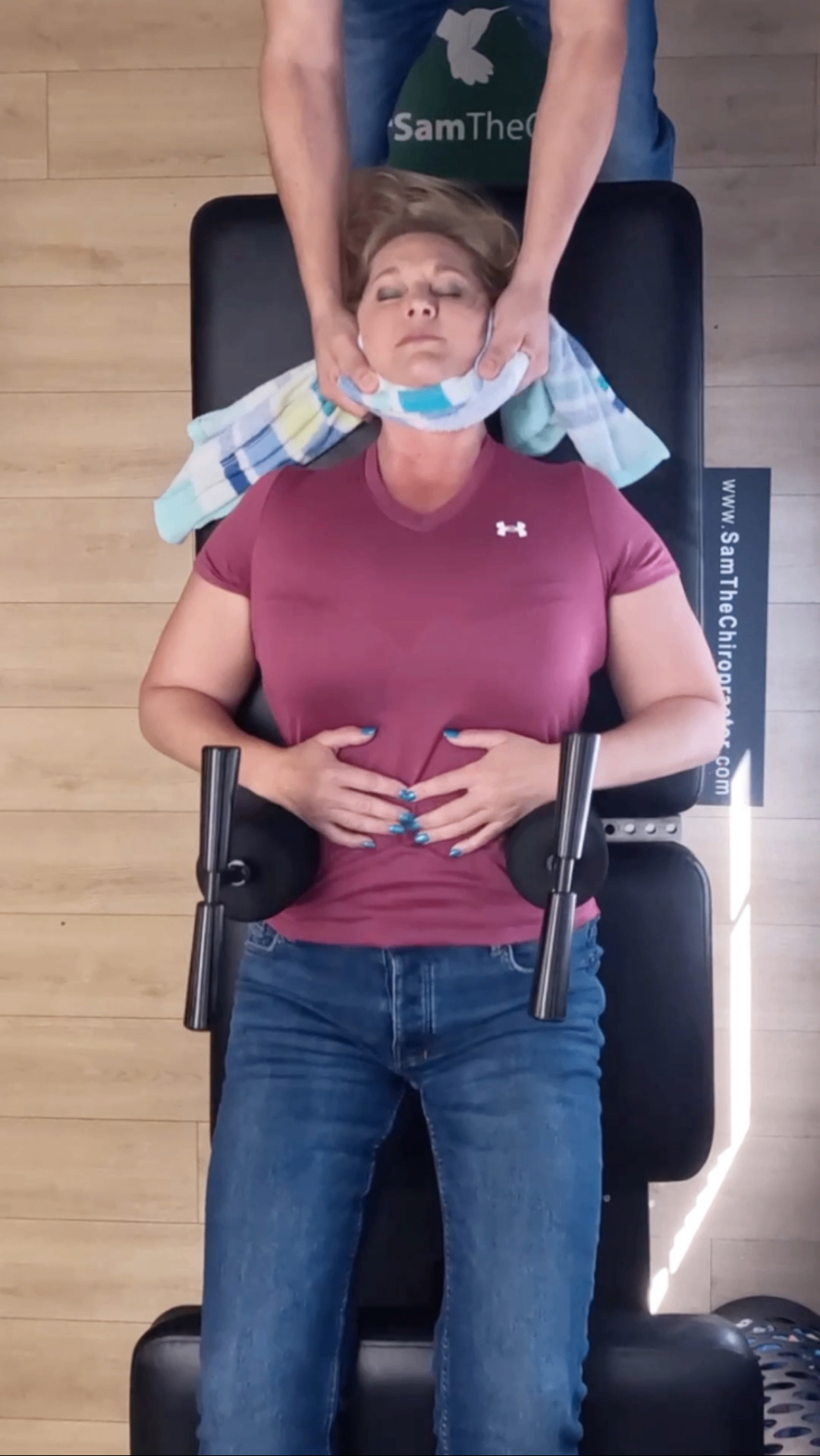
Overview
Flexion distraction uses a specialized table to gently flex and distract the lumbar spine, opening disc space and reducing nerve pressure.
Quick takeaway
Gentle, table-assisted decompression — ideal for acute disc and lower back pain.
What it does
Here's what most patients notice from flexion distraction — outcomes vary by case, but these are the consistent themes we see in the clinic.
- Very gentle
- Excellent for acute lumbar pain
- Reduces disc pressure
How it works
An evidence-based technique especially helpful for low-back disc bulges, stenosis and acute lumbar radiculopathy.
Watch Flexion Distraction in action
Real footage from the clinic — see Dr. Sam perform flexion distraction and related techniques. More on the video gallery.
Full Spine Decompression
In-depth guide to Flexion Distraction
Flexion Distraction is a specialized, gentle, table-assisted decompression technique developed in the mid-twentieth century by Dr. James Cox and refined over decades of clinical practice and research. It is one of the best-studied non-surgical interventions for lumbar disc pathology, with multiple peer-reviewed studies supporting its use for disc herniation, lumbar stenosis, sciatica, and a variety of other lower back conditions. Dr. Samuel Ruiz incorporates Flexion Distraction at our Ontario, CA clinic for patients whose presentation calls for the gentlest possible decompression — particularly those with acute pain, advanced disc pathology, or sensitivity to higher-velocity techniques.
The technique uses a specialized adjusting table with a movable lower section. The patient lies face down with the legs supported. As the lower section of the table cycles slowly through controlled flexion and distraction, the chiropractor applies precise, gentle pressure to the lumbar spine at the specific level of injury. The combination of slight flexion and gentle long-axis distraction creates a brief, controlled negative pressure within the disc — encouraging fluid and nutrient exchange, reducing pressure on adjacent nerve roots, and gradually allowing posterior disc material to retract toward neutral.
Acute lumbar disc patients often respond particularly well. When a disc has recently herniated and the surrounding tissue is inflamed and protective, higher-force adjustments may be poorly tolerated. Flexion Distraction allows decompression to begin immediately without provoking the protective spasm response. Many acute disc patients are able to tolerate Flexion Distraction comfortably from their first visit and report meaningful reduction in pain and radiating symptoms within the first few sessions.
Lumbar stenosis — narrowing of the spinal canal or foraminal openings — is another condition for which Flexion Distraction is especially well suited. Stenosis pain is typically worsened by extension (standing, walking) and relieved by flexion (sitting, leaning forward). The slight flexion bias of the technique opens up the narrowed spaces, takes pressure off the affected nerve roots, and provides direct relief of the underlying mechanical irritation. Patients with longstanding stenosis often experience meaningful improvement in their walking tolerance after a course of care.
The technique combines beautifully with other approaches in the clinic. Many disc patients receive Flexion Distraction as their primary technique during the acute phase, transition to Ring Dinger® and full-spine decompression as inflammation resolves, and add Johnson BioPhysics® corrective work to address the underlying postural drivers in the longer term. Dr. Sam tailors the combination of techniques to each patient's specific presentation and stage of recovery rather than applying any single technique uniformly.
Patient comfort during Flexion Distraction is high. There is no audible cavitation ('popping'), no high-velocity thrust, and no dramatic positioning. Sessions are slow, methodical, and easy to tolerate even for patients with significant pain. Many patients describe a deep, gentle stretching sensation during the session and immediate reduction in pressure afterward. Patients who have been wary of chiropractic care because of the imagery they associate with adjusting find Flexion Distraction reassuring and easy to accept.
Indications for Flexion Distraction include lumbar disc herniation, lumbar disc bulge, lumbar foraminal or central stenosis, sciatica with a confirmed lumbar source, post-surgical lumbar pain (with appropriate clearance), and acute low back pain that has not responded to conservative measures. Contraindications include uncontrolled fracture, infection, malignancy, severe osteoporosis, and certain post-surgical conditions, all of which are screened during the initial evaluation. When indicated, the technique is one of the safest and best-tolerated options in conservative spine care.
If you have been dealing with acute or chronic low back pain — particularly if it radiates into a leg, worsens with prolonged standing, or has been attributed to a disc bulge or stenosis on imaging — a consultation at our Ontario, CA clinic will help you understand whether Flexion Distraction is the right starting point. New patient evaluations are $300 and include a thorough lumbar assessment and discussion of treatment options; follow-ups are $200. Patients come from across the Inland Empire and beyond for this combination of evidence-based technique and individualized, hands-on care.
Flexion-distraction therapy is the gold-standard low-force option for disc and stenosis cases that cannot tolerate manual cracking. The specialized table does the work — a slow, rhythmic stretch that opens the posterior disc space and gently mobilizes the lumbar spine. Dr. Sam often uses flexion-distraction as the first phase of disc rehabilitation, then transitions to more specific adjustments once the disc has had time to decompress.
To book a flexion-distraction session, call (909) 529-1179 and mention any disc, stenosis, or sciatic symptoms so the appointment is scheduled with adequate table time. The clinic is at 1155 S. Milliken Ave, Suite J, Ontario, CA 91761 — free parking and direct access from the 10, 60, 15, and 71. New-patient evaluation is $300 (exam plus first treatment), follow-ups $200, with HSA/FSA, debit, and credit cards accepted.
Who it's for
Flexion Distraction is a strong fit for patients dealing with:
- Acute low-back pain
- Lumbar disc bulges
- Stenosis
What to expect at your visit
- 1
Consultation & exam
Dr. Sam reviews your history, posture, and movement to find the root cause — not just the symptom.
- 2
Hands-on treatment
Your flexion distraction session is delivered one-on-one with no rushed handoffs or assistants.
- 3
Plan forward
You leave with a clear understanding of what was done, how you'll likely feel, and whether follow-up care is recommended.
Frequently asked
Does it hurt?
Most patients describe the sensation as a deep stretch followed by relief. Dr. Sam adjusts force to your comfort.
How long is the appointment?
Plan for about 30–45 minutes. New patient visits include a full exam and may run slightly longer.
Do you accept insurance?
We're a transparent cash-pay practice. New patient $300, follow-ups $200. HSA, debit and credit accepted.